Why Dubai Is the Best Base for International Shipping in the Middle East
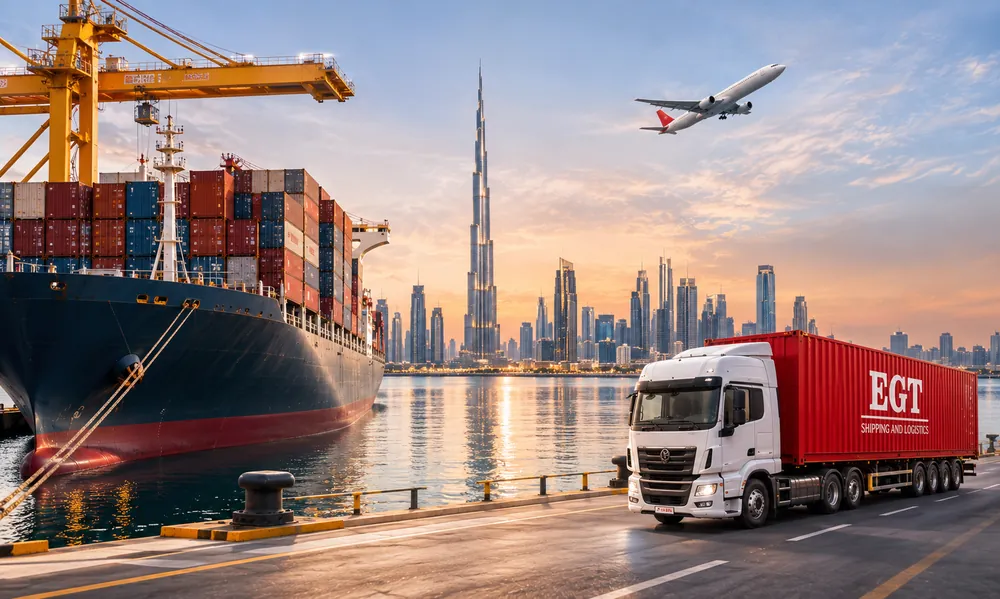
Look at a map of global trade and one city keeps appearing at the crossroads: Dubai. Goods from China, India and Turkey arrive here every day, then move on to Saudi Arabia, the rest of the GCC, Africa and Central Asia.
For importers, exporters and e-commerce sellers, where you base your logistics decides how fast you can deliver and how much each shipment costs. Ports, airports, customs, free zones and road links all matter.
Here is why so many businesses choose Dubai as their base for international shipping in the Middle East, and what that means for your supply chain.
1. A location between East and West
Dubai sits halfway between the factories of Asia and the markets of Europe and Africa. Around two-thirds of the world’s population lives within an eight-hour flight of the city.
For shippers, this means shorter transit times from China and India, easy connections to Europe, and a single hub from which to reach the whole Gulf region.
2. Jebel Ali: the region’s largest container port
Jebel Ali Port is the largest container port in the Middle East and the main gateway for UAE trade. According to Drewry, it handled about 15.5 million TEU in 2024.
Its deep-water berths receive the world’s largest container ships, and it connects to more than 150 ports through regular shipping lines. For importers, this means more sailing options, more competitive sea freight rates and more frequent departures than smaller regional ports.
Shipping to or from Dubai?
Tell us your origin, destination and cargo. Our Dubai team will suggest the best route, by sea, air or road.
3. World-class air cargo
When speed matters, Dubai has two major airports: Dubai International (DXB) and Al Maktoum International (DWC) at Dubai World Central, which was designed around cargo.
Both connect to hundreds of destinations. This makes Dubai ideal for urgent, high-value or time-sensitive goods, and for sea-air combinations: goods arrive by sea from Asia and continue by air to Europe or Africa.
4. Free zones built for trade and re-export
Dubai’s free zones, led by Jafza next to Jebel Ali, let companies store, process and re-export goods without paying UAE customs duty on cargo that leaves the country again.
Re-export is a major part of the UAE economy. In 2025, UAE non-oil foreign trade passed AED 3.8 trillion for the first time, and re-exports alone reached about AED 830 billion. Much of this trade flows through Dubai to Saudi Arabia, Iraq, Africa and Central Asia.
5. Fast, digital customs
Dubai Customs runs one of the most digital clearance systems in the region. Declarations, payments and approvals are handled online, which reduces paperwork and waiting time at the port.
Clearance is still only as fast as your documents. Working with a forwarder that prepares and checks your commercial invoice, packing list and certificates before arrival is what keeps cargo moving. Learn more about our customs clearance service.
6. The gateway to Saudi Arabia and the GCC by road
From Dubai, trucks reach Saudi Arabia, Oman, Qatar, Bahrain and Kuwait by road. Saudi Arabia is the region’s largest consumer market, and road freight from Dubai is often the most practical way to serve it.
Etihad Rail’s freight network adds another option, linking UAE ports and industrial areas across the country. These connections are at the heart of the UAE’s 2031 logistics strategy.
7. Several routes when one is disrupted
No hub is immune to disruption. Since early 2026, the regional conflict has affected shipping through the Strait of Hormuz and reduced vessel calls at Gulf ports, including Jebel Ali.
This is where Dubai’s mix of options matters. Cargo can be routed through UAE east-coast ports such as Khor Fakkan and Fujairah, which lie outside the Strait, and then trucked to Dubai, or through Sohar in Oman. Air cargo and road freight remain available. A forwarder with teams on the ground can adapt the route quickly instead of leaving your goods waiting.
Dubai’s advantages at a glance
| Advantage | What it means for you |
|---|---|
| Central location | Shorter transit times from Asia, easy links to Europe and Africa |
| Jebel Ali Port | More sailings, larger vessels, competitive sea freight rates |
| Two major airports | Fast air cargo and sea-air options |
| Free zones | Store and re-export without UAE customs duty on re-exported goods |
| Digital customs | Less paperwork and faster clearance |
| Road and rail links | Direct access to Saudi Arabia and the GCC |
| Multiple routes | Alternatives when a sea lane is disrupted |
Use Dubai as your shipping base
Get a written, itemized quote for your next shipment through Dubai, from pickup to final delivery.
Why work with EGT Shipping & Logistics in Dubai
EGT is an international shipping company in the UAE with more than 15 years of experience. From our headquarters in Dubai, we run our own branches in Saudi Arabia, Turkey and China, with warehouses in Foshan and Yiwu.
We handle sea, air and road freight, consolidation, in-house customs clearance and door-to-door delivery. Whether you ship pallets from Guangzhou or a few cartons to Riyadh, we choose the route that fits your cargo. Importing from China before February? See our Chinese New Year and Ramadan 2027 shipping plan. Not sure which service you need? Read our guide on freight forwarder vs. courier in the UAE.
Talk to the EGT team today
Tell us what you are shipping, from where and to where. Our experts will recommend the best route and send you an itemized quote.
- 📞 UAE (Dubai headquarters): +971 4 295 9966
- 📞 Saudi Arabia (Jeddah & Riyadh): +966 57 403 0000
- ✉️ Email: info@egt.group
- 🕘 Monday to Saturday, 9:00 am – 6:00 pm
Frequently asked questions
Why is Dubai a major logistics hub?
Dubai combines a central location, the region’s largest container port at Jebel Ali, two international airports, free zones for re-export and direct road links to the GCC.
What is the main port in Dubai?
Jebel Ali Port, operated by DP World, is Dubai’s main container port and the largest in the Middle East.
Can I re-export goods from Dubai without paying UAE customs duty?
Goods stored in a free zone and re-exported outside the UAE are generally not subject to UAE customs duty. Rules depend on the zone and the goods, so check with your forwarder before shipping.
Is shipping through Dubai affected by the situation in the Strait of Hormuz?
Some sea routes have been disrupted since 2026. Cargo can still reach Dubai via east-coast ports such as Khor Fakkan and Fujairah, by air or by road. Ask your forwarder for the current best route.
